
The exhibition draws from original research conducted by Joo on Sapelo Island, a barrier island and nature reserve off the coast of Georgia, as well as his ongoing exploration of natural and chemical materials and processes.
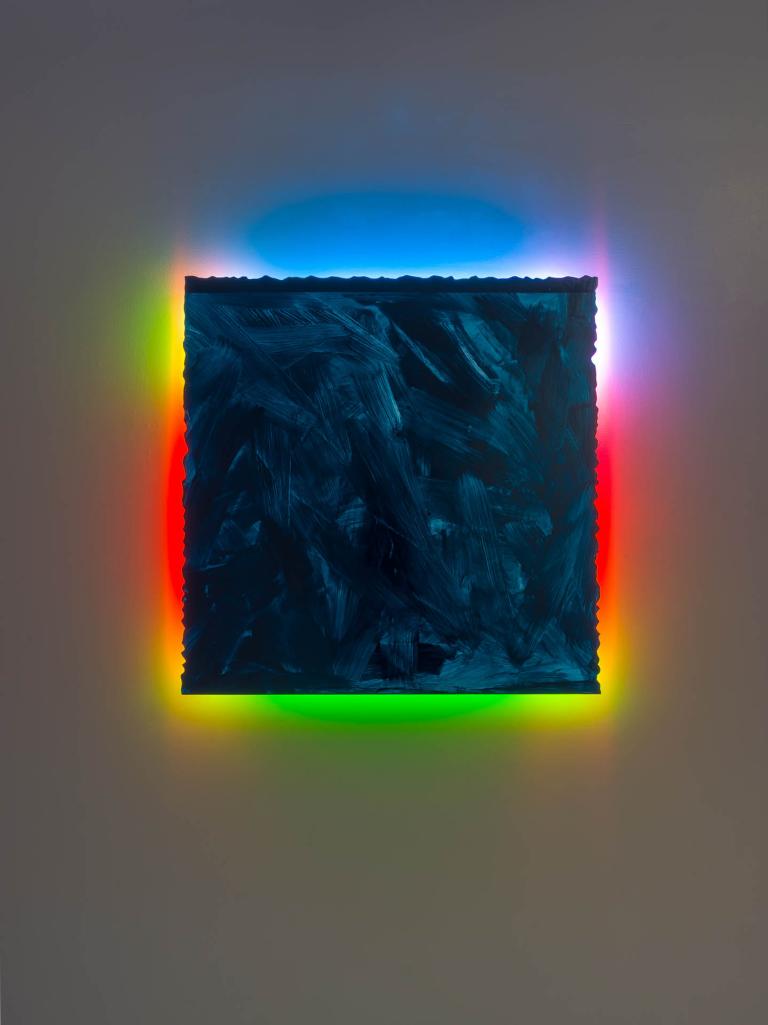
In collaboration with the SCAD preservation design program, the artist created a site-specific installation made of tabby — a southern, vernacular building material comprised of lime, sand and shells. A series of large-scale, two-dimensional works features images derived from the forests and natural growth on the island. These works embody important material and conceptual explorations by Joo over the last decade, involving a complex chemical process using silver nitrate and sensitized epoxy to reveal layered imagery. The luster and reflectivity of these works are echoed by the polished marble surfaces of three monumental structures, aptly described by the artist as “billboards.”
Sapelo Island inspired Joo with its rich and tumultuous history of human habitation. Home to one of the last remaining intact Gullah – Geechee communities in the United States, the island’s status as a nature preserve enabled verdant growth to overtake much of the earlier traces of human influence on the landscape. This includes the large-scale, ancient Native American Sapelo shell rings complex (dated to 2170 B.C.); extensive landscaping and excavations exerted by the plantation owners of the 19th and 20th centuries; a compacted sawdust landmass created during the radical deforestation and logging of the island for the hungry timber industries of the 19th century; rapidly eroding tabby structures; tombstones of ancestors of African-American inhabitants in Behavior Cemetery and the ostentatious edifices of the Reynolds Mansion that recall the island’s social and economic iniquities.