5:30 p.m.
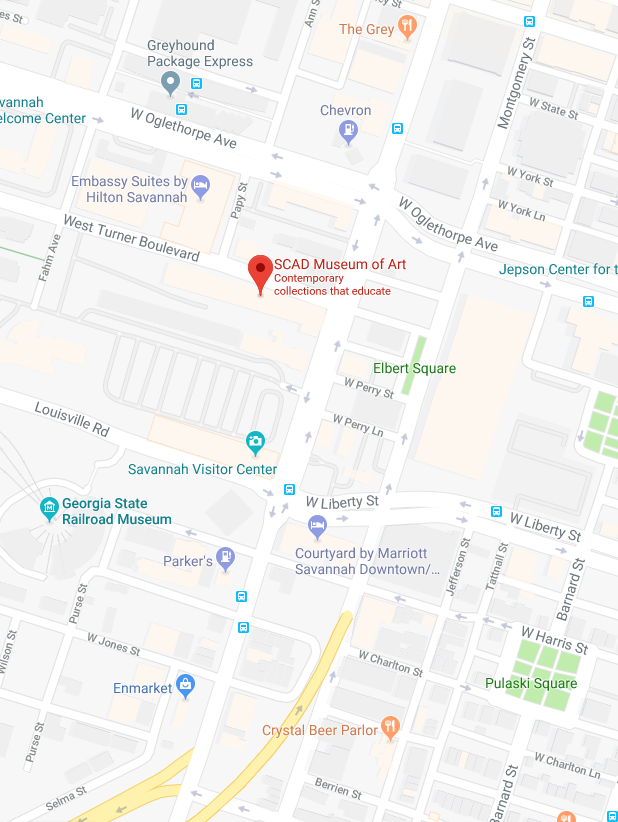
SCAD Museum of Art
601 Turner Blvd.
Savannah, Georgia
This event is free and open to the public. To RSVP, email [email protected].
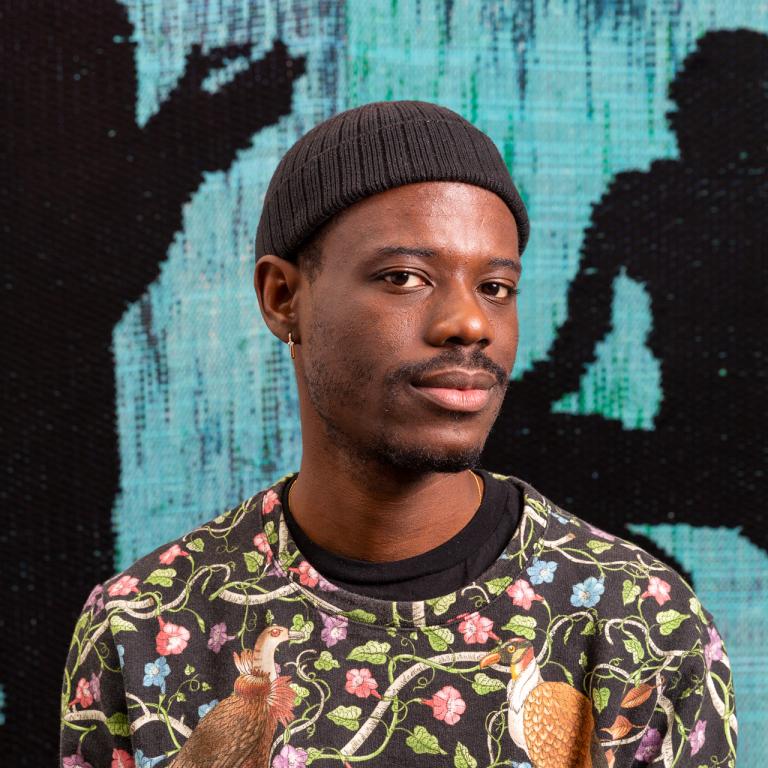
Diedrick Brackens’ tapestries are sites of reckoning. They revel in the geometries and coded patterning of traditional African American quilters, wade through myth and ancestral folk narrative, and contend with the histories of European figurative and African abstract textiles. Through his own recent figurative works, stylized silhouettes in flexed dance positions, Brackens transcends what the body is capable to express. Accenting once marginal, mutable, and clandestine living, Brackens commemorates the thoughts, ethics, and poetics of aliveness and considers how his woven works contain missives for Black, queer, and Southern peoples.
In Sermon III: Expressions of Southern Landscapes, join Brackens and the Evans Center for African American Studies for a conversation about landscape, Southern storytelling, and mapping the convergences in Brackens’ dazzling, sublime, and transmigrational work.
This event is the third installment in a programmatic mini-series titled Sermons, as an extension of the Aaron Douglas: Sermons exhibition. Combining both secular and spiritual affiliations, Sermons focuses on sites of inquiry that provide upliftment and/or passageways toward liberation.
Established in 2011, the SCAD Museum of Art’s Walter and Linda Evans Center for African American Studies celebrates the imaginative breadth and expressive legacy of African American art and culture. Through experimental public programs, immersive workshops, riveting lectures, and topical symposia, the Evans Center immerses students and community members in the rich tapestry of Black expression.
About the artist
Diedrick Brackens (b. 1989, Mexia, Tex.; lives and works in Los Angeles, Calif.) is best known for his woven tapestries that explore allegory and narrative through the artist’s autobiography, broader themes of African American and queer identity, and American history. Brackens uses techniques from West African weaving, quilting from the American South, and European tapestry-making to create both abstract and figurative works. Often depicting moments of male tenderness, Brackens culls from African and African American literature, poetry, and folklore as source. Beginning with the process of hand-dyeing cotton, a material the artist deliberately uses in acknowledgment of its brutal history, Brackens’ oeuvre presents rich, nuanced visions of African American life and identity, while also alluding to the complicated histories of labor and migration. Brackens uses both commercial dyes and atypical pigments such as wine, tea, and bleach to create his vibrant, intricately woven tapestries that investigate historical gaps, interlacing the present with his singular magical realist worldview.